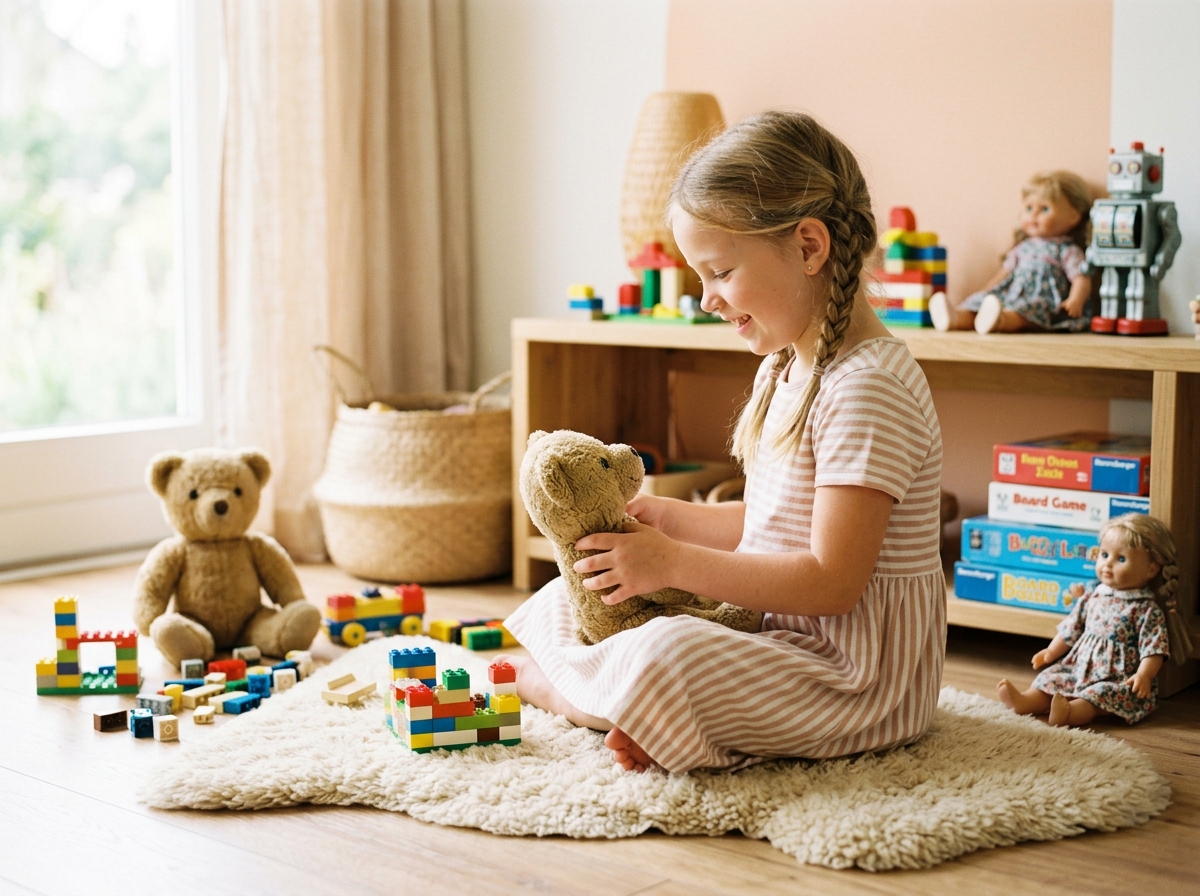
 Recommended tutor: Sarah
Why this matters
Toys are the topic kids will talk about for an hour without noticing they're learning English. The vocabulary is concrete (teddy, ball, doll, Lego, game), the grammar is gentle (I have, my favourite is, it is red), and every child has at least one thing they love and want to describe.
The tutor stays playful and curious. They ask about colours, sizes, who gave the toy, what the child builds with it. If a child has few toys, the tutor pivots to drawings, books, climbing trees, helping cook — anything they enjoy at home. By the end of two lessons, most kids can describe a favourite toy with two adjectives and ask another person about theirs.
What you’ll be able to do
- ✓Name 5+ common toys: teddy bear, Lego, doll, robot, ball, game.
- ✓Describe a toy with two adjectives: "It is red and big."
- ✓Say where a toy is from: "My grandma gave it to me."
- ✓Use colour vocabulary in real sentences (red, blue, green, pink…).
- ✓Ask another person "What's your favourite toy?".
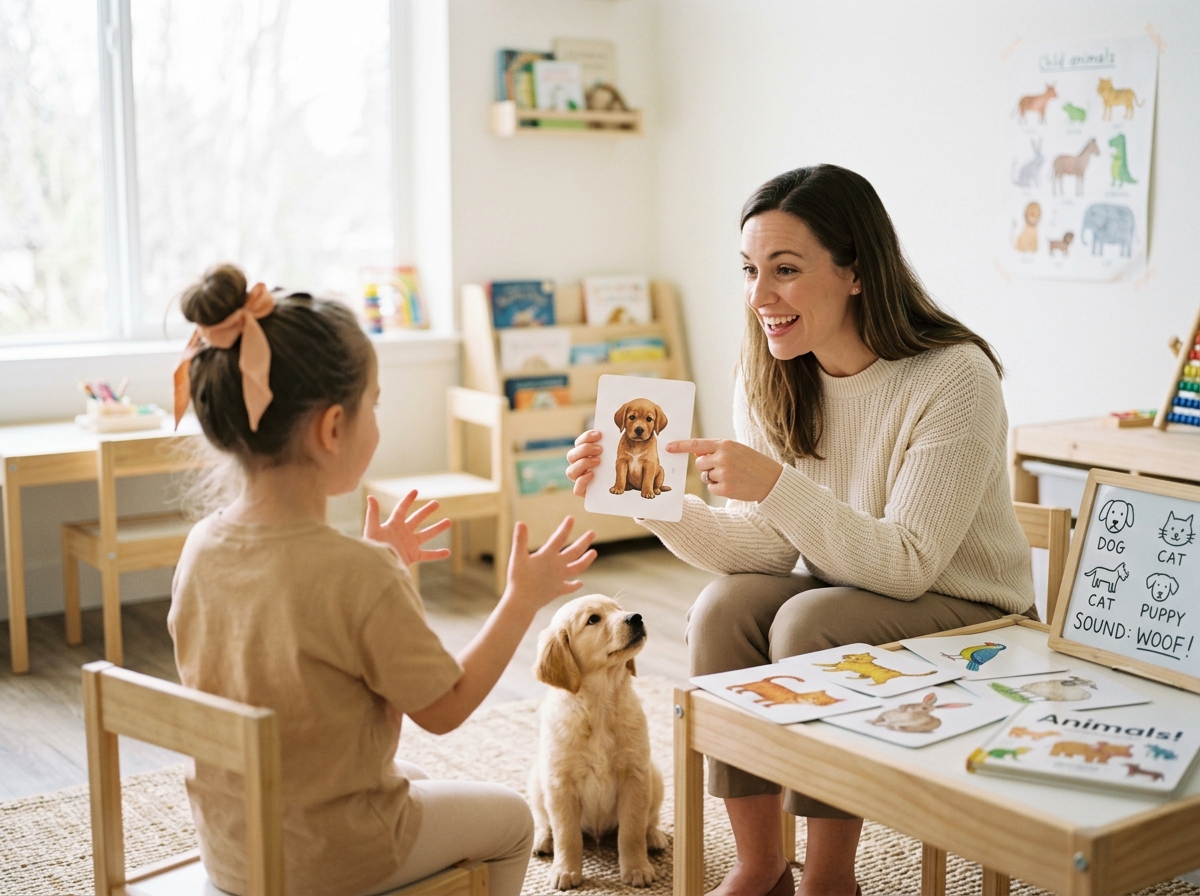
What a lesson actually feels like
A 7-year-old talks about a teddy bear named Bear-Bear.
Key vocabulary
Useful phrases by situation
My toy
- “I have a teddy bear.”
- “My favourite toy is Lego.”
- “I play with it every day.”
- “My grandma gave it to me.”
Asking about toys
- “What's your favourite toy?”
- “Do you have a teddy bear?”
- “What colour is it?”
- “Is it big or small?”
Describing toys
- “It is red and blue.”
- “My doll is small and soft.”
- “My Lego castle is huge!”
- “My robot is grey.”
Common mistakes & how to fix them
Cultural notes
- ★In the UK kids spell it "colour"; in the US it is "color". Same word, different countries.
- ★British kids treat "Lego" as a single word for the whole pile of blocks ("I have lots of Lego"). American kids often say "Legos". Both are heard, neither is wrong — Lego the company prefers the British way.
Tips from our tutors
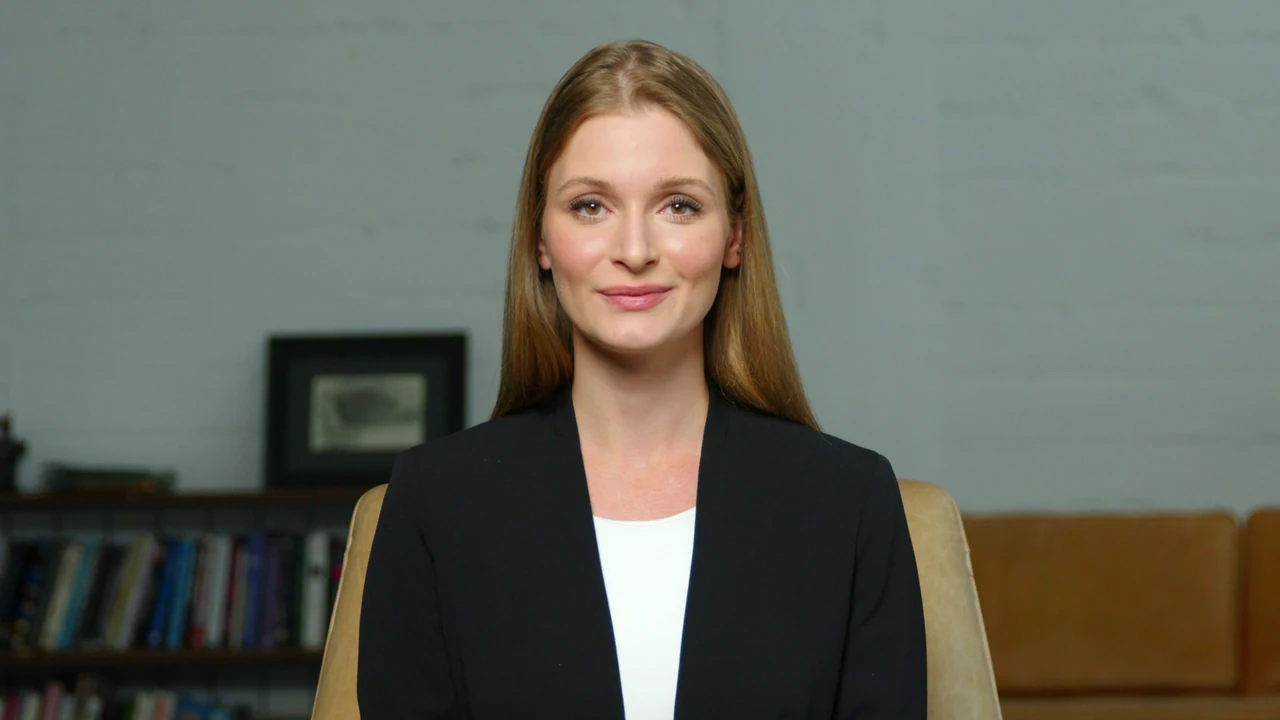
Frequently asked
Will the tutor talk about screen-time and video games?+
What if my child doesn't have many toys?+
Will the tutor compare my child's toys with other children?+
How is this different from Animals & Pets?+
Beginner, intermediate, advanced
Tell the tutor your level at the start of the lesson and the conversation adjusts. Same topic, different depth.
Name one toy and its colour. "My teddy is brown". One word at a time is fine.
- →Say "my favourite toy is [name]".
- →Name 3 colours.
- →Say if your toy is big or small.
Describe a toy with size + colour + who gave it. The tutor practises numbers ("I have three Lego boxes") and possessives.
- →Describe a toy with two adjectives.
- →Say who gave it to you and when.
- →Compare two toys ("My ball is bigger than my robot").
Tell why this toy matters to you — a memory, a story, a feeling. Two or three short sentences in simple past or present.
- →Tell a 3-sentence story about a toy.
- →Use one feeling word ("I love it because it makes me happy").
- →Ask a follow-up question about another person's toy.
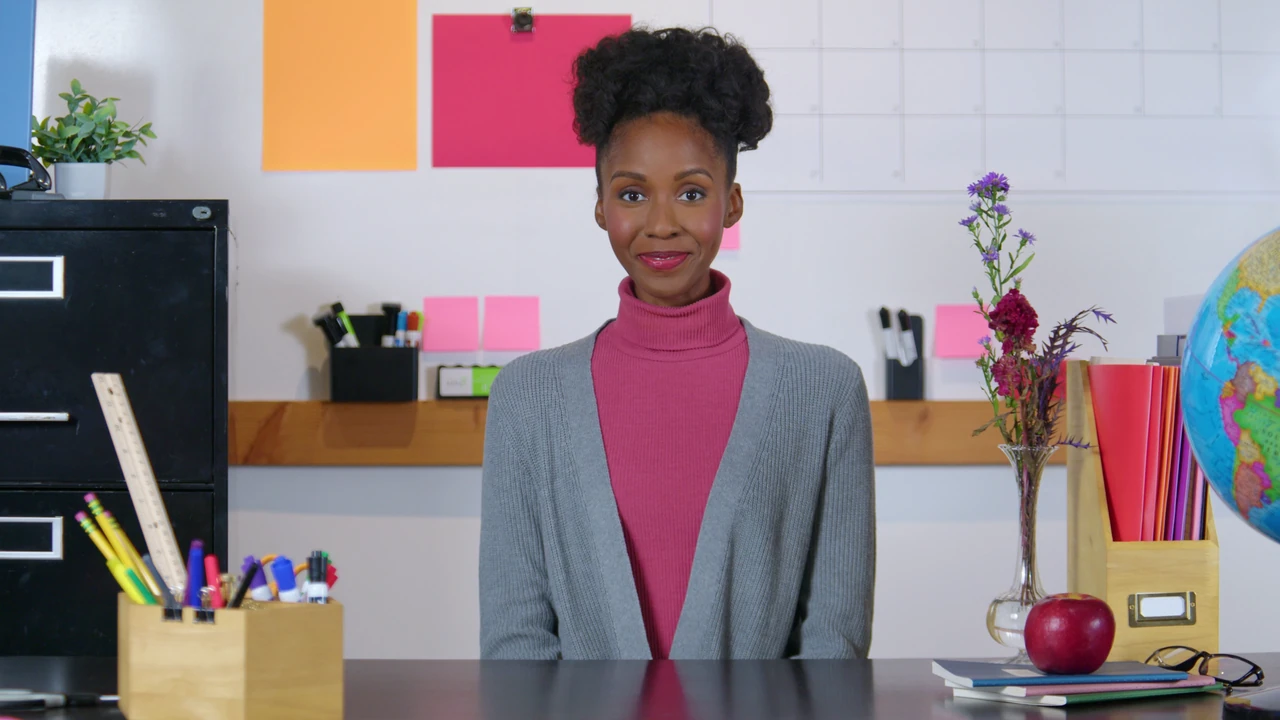
Suggested tutors for this topic


Related topics

Ready to practice favourite toys?
Free 5-minute trial. No card. No commitment.
Start lesson — free →