 Recommended tutor: Sarah
Why this matters
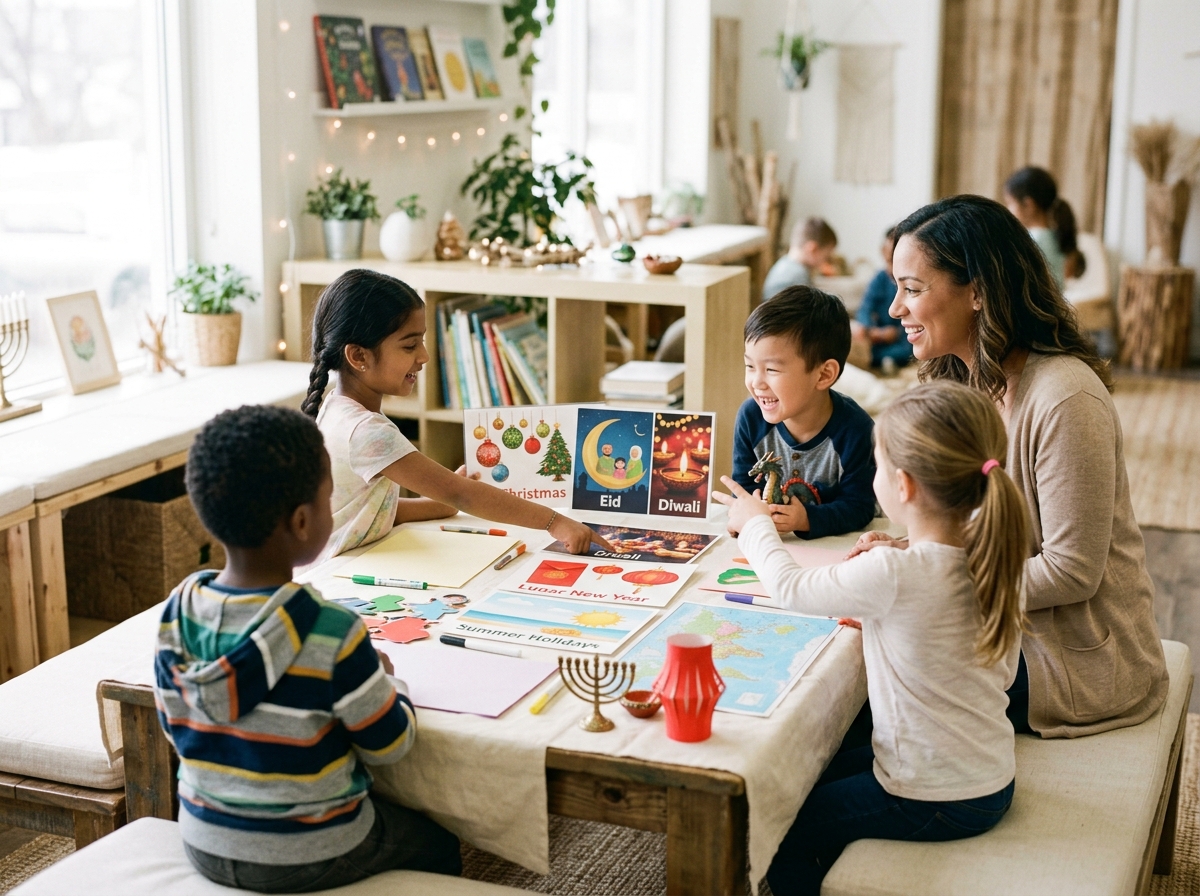
Holidays are the topic where every kid has something to say — and where every family looks different. Some celebrate Christmas with a tree, some Eid with cousins and grandparents, some Diwali with lights and sweets, some just love the long summer break with no school. The vocabulary is warm and concrete (food, family, presents, trip), and the grammar is gentle (we go, I love, my favourite is).
The tutor stays multicultural by default. They never assume one tradition; they ask which holiday is the child's favourite and follow whichever answer comes back. Religious or secular, big or quiet, travelling or staying home — every holiday gets the same warm follow-up about food, family, and fun. By the end of two lessons, most kids can describe their favourite holiday in English and ask another person about theirs.
What you’ll be able to do
- ✓Name their favourite holiday and one thing about it.
- ✓Describe a special holiday food.
- ✓Talk about who they spend the holiday with.
- ✓Use travel vocabulary: trip, beach, plane, train, grandma's house.
- ✓Wish someone "Happy holidays!" or "Happy New Year!".
What a lesson actually feels like
An 8-year-old talks about Eid with extended family.
Key vocabulary
Useful phrases by situation
My favourite holiday
- “My favourite holiday is Christmas.”
- “I love Eid.”
- “In Diwali we have lights.”
- “New Year is fun.”
Holiday food
- “My grandma makes biryani.”
- “We have a big dinner.”
- “I love the cake.”
- “My dad cooks turkey.”
Travelling on holiday
- “We are going to the beach.”
- “We go to grandma's.”
- “We stay at home and play games.”
- “We're flying to my cousins.”
Common mistakes & how to fix them
Cultural notes
- ★Different families celebrate completely different things, and that's totally normal. The tutor never assumes — they ask which holiday is yours.
- ★"Happy holidays!" is a friendly greeting that works for everyone, no matter which holiday they celebrate. "Merry Christmas" only fits if you know the person celebrates it.
Tips from our tutors

Frequently asked
My family is religious. Will the tutor be respectful?+
What if we don't celebrate any holidays?+
Will it work for split families with two homes?+
How is this different from Birthday Party?+
Beginner, intermediate, advanced
Tell the tutor your level at the start of the lesson and the conversation adjusts. Same topic, different depth.
Name your favourite holiday. The tutor accepts any holiday — Christmas, Eid, Diwali, summer holidays — and lets you say one thing about it.
- →Name your favourite holiday in English.
- →Say one thing you do ("we eat", "we go to grandma's").
- →Say "I love it" or "I don't love it" with one reason.
Describe a traditional holiday food and who comes over. The tutor builds 3-sentence answers with you.
- →Name a traditional food and one ingredient.
- →List the family members who come.
- →Use "we always" / "we usually" / "we sometimes".
Tell what made one holiday especially memorable. Two or three sentences in simple past, with a small twist or surprise.
- →Tell a 3-sentence story about one specific holiday.
- →Use one feeling word ("excited", "tired", "surprised").
- →Ask another person about their holiday traditions.
Suggested tutors for this topic



Related topics



Ready to practice holidays?
Free 5-minute trial. No card. No commitment.
Start lesson — free →