
Why this matters
Friend dynamics in your second language are harder than school English. The vocabulary in textbooks is for ordering food and finding a hotel — not for telling someone you feel hurt, asking why they've gone quiet, or getting an apology out without sounding weak. The hardest English most teens ever speak is the kind that has feelings under it.
These lessons give you a low-stakes place to practise those exact conversations. The tutor listens first, never tells you what to do, and helps you find the words you need. Whether you're trying to write a DM that doesn't sound passive-aggressive, or you want to rehearse an apology before you give it for real, you can do it here without judgement — and walk away with phrases that work in real life.
What you’ll be able to do
- ✓Describe a conflict in three clear sentences without rambling.
- ✓Ask "How are you feeling about it?" naturally.
- ✓Give a strong apology: "I'm sorry I [specific thing]" — not "sorry you feel that way".
- ✓Listen actively in English: "That makes sense", "I get why you'd feel that way".
- ✓Set a kind boundary: "I love you, but I need a bit of space tonight."
What a lesson actually feels like
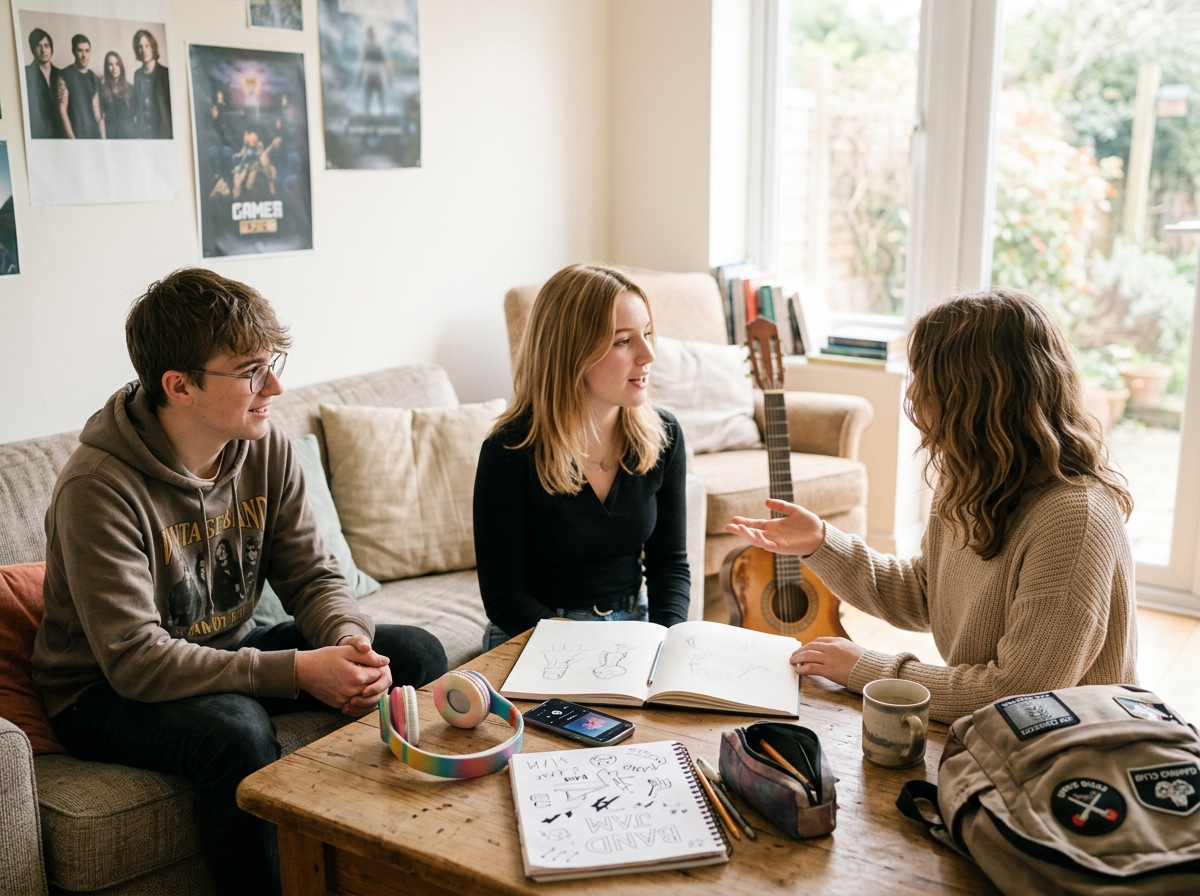
A 15-year-old whose best friend has been distant for two weeks.
Key vocabulary
Useful phrases by situation
Describing a problem
- “I think she's upset with me.”
- “He's been ghosting me for two weeks.”
- “We had a fight on Friday.”
- “I don't know what I did wrong.”
Asking how someone feels
- “Are you okay?”
- “How are you feeling about it?”
- “Do you want to talk about it, or not really?”
- “Is there anything I can do?”
Apologising
- “I'm sorry I [specific thing].”
- “I shouldn't have said that. I get it now.”
- “I want to fix this. Can we talk?”
- “I miss you. Can we make up?”
Common mistakes & how to fix them
Cultural notes
- ★In English-speaking teen culture, "ghosting" (suddenly going silent) is more common than direct confrontation. It's not a healthier choice — but it's a real pattern. Naming it ("she's ghosting me") gives you the language to talk about it.
- ★"I'm sorry" lands stronger than "I'm sorry you feel that way." The second one is technically an apology but it puts the blame on the other person's feelings — most native speakers will hear it as dismissive. Your apology is stronger when it names what YOU did.
Tips from our tutors

“We don't have to fix anything today. Tell me what's going on, and I'll just listen — that's the whole lesson if you want it.”

“If you want to practise an apology before you actually say it for real, that's exactly what we're here for. We can do it five times until it sounds right.”
Frequently asked
Will the tutor judge what I tell them?+
What if it's a really sensitive topic — like the friend hurt me on purpose?+
Can I rehearse an apology I'm scared to give in real life?+
Is the tutor a therapist?+
Beginner, intermediate, advanced
Tell the tutor your level at the start of the lesson and the conversation adjusts. Same topic, different depth.
Describe one feeling in one sentence. "I'm sad", "she ignored me". The tutor responds with empathy first and helps you build the next sentence.
- →Name a feeling in English ("I'm hurt", "I'm worried").
- →Say what happened in one sentence.
- →Answer "how are you feeling about it?" without freezing.
Empathy phrases and the apology arc. "That sounds hard", "I get why you'd feel that way", "I'm sorry I [specific thing]". The tutor models supportive English and lets you rehearse a real apology.
- →Use 3 empathy phrases naturally ("that makes sense", "I get it").
- →Give a strong apology: "I'm sorry I [X]" rather than "I'm sorry you feel that way".
- →Listen actively in English without rushing to fix.
Boundary-setting and difficult conversations. Tell a friend you need space, name a pattern that hurts you, decline an invitation kindly. Native register, no scripts.
- →Set a kind boundary ("I love you, but I need a quiet weekend").
- →Name a pattern without making it an attack ("I notice that...").
- →Distinguish a strong apology from a dismissive one and avoid the latter.
Suggested tutors for this topic



Related topics


Ready to practice friend problems?
Free 5-minute trial. No card. No commitment.
Start lesson — free →