Why this matters
Music and hobbies are where teen English actually gets used. The grammar is straightforward (I'm into, I'm obsessed with, I can't stand), but the vocabulary moves fast — genres change yearly, slang changes monthly, and the only way to keep up is to talk about what you're listening to right now. School English drills past tense for half a year before you ever get to say something is "sick" or "a vibe".
These lessons let teens talk about their actual taste — the band they're playing on repeat, the game they can't put down, the hobby their parents don't get. The tutor takes every preference seriously, asks genuine follow-ups about niche bands they haven't heard of, and never patronises. By a few lessons in, the rhythm of casual teen English starts feeling natural.
What you’ll be able to do
- ✓Talk about a favourite band or artist with two specific reasons.
- ✓Describe a hobby and how often you do it ("I skateboard most weekends").
- ✓Use "into / obsessed with / can't stand" naturally.
- ✓Ask another person about their music taste without it sounding awkward.
- ✓Give a quick opinion on a song, game, or trend.
What a lesson actually feels like
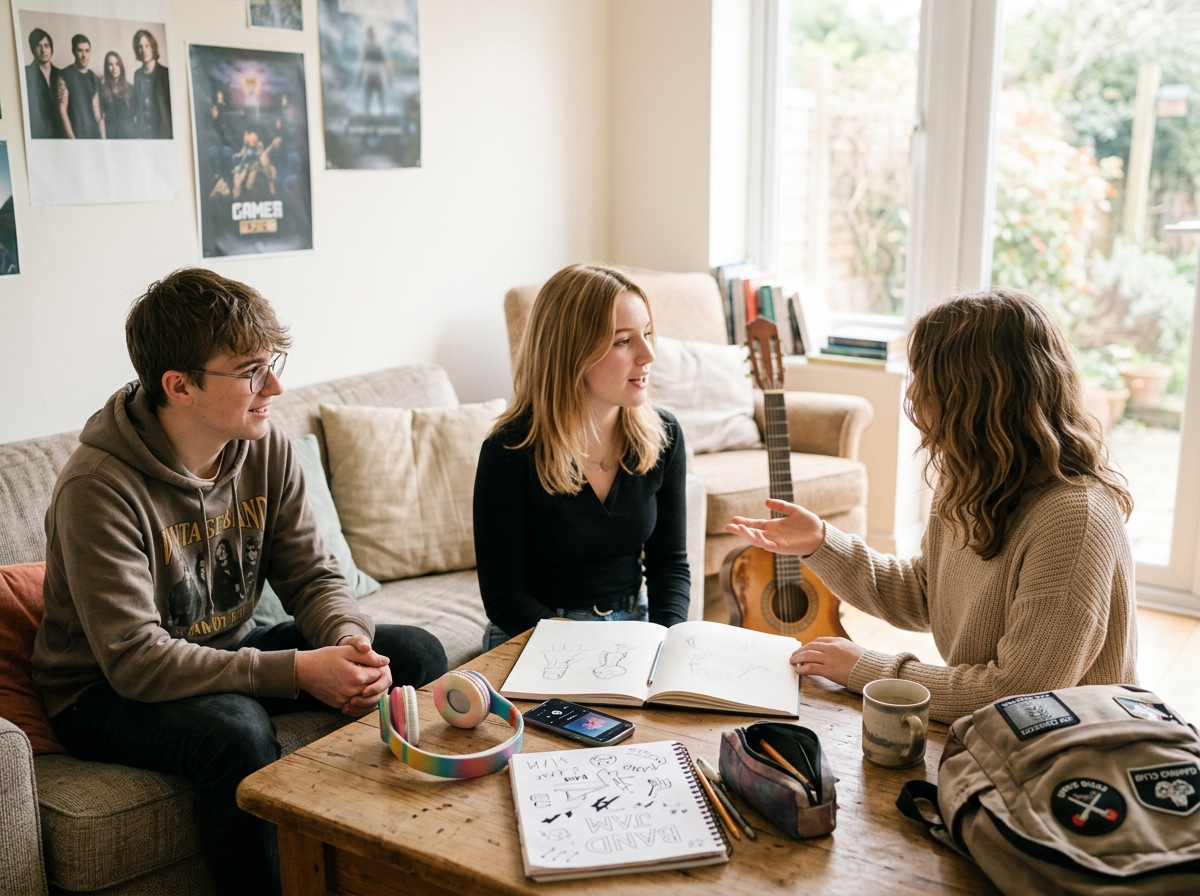
A 14-year-old talks about a K-pop group they're obsessed with.
Key vocabulary
Useful phrases by situation
Talking about music
- “I'm really into K-pop / hip-hop / indie at the moment.”
- “My favourite band is...”
- “There's this one song I keep replaying.”
- “Have you heard of [artist]? They're underrated.”
Talking about hobbies
- “I usually skate on weekends.”
- “I've been gaming way too much lately.”
- “I've been drawing since I was a kid.”
- “I go to the gym three times a week.”
Asking back
- “What about you, what are you into?”
- “Have you heard of them?”
- “Do you play any sports?”
- “What music do you put on when you study?”
Common mistakes & how to fix them
Cultural notes
- ★In English-speaking teen culture, "into" is the most natural word for current interest. "I'm into indie" sounds way more natural than "I am very interested in indie music".
- ★Hobby names are often different in UK and US: UK kids "do drama club", US kids "are in theatre"; UK "football" = US "soccer"; "American football" is the contact sport. Use whichever your tutor uses.
Tips from our tutors

“Tell me one band or hobby you love, and I'll be honest if I haven't heard of them. We'll figure out the English together.”

“Don't dumb down your taste. If you love a niche genre, lead with that — the words to describe it come fast once you're talking about something real.”
Frequently asked
Will the tutor know my favourite artist or game?+
Can I talk about gaming?+
Is this lesson too easy if I'm fluent?+
Will the tutor judge my music taste?+
Beginner, intermediate, advanced
Tell the tutor your level at the start of the lesson and the conversation adjusts. Same topic, different depth.
Name your favourite genre and one band. The tutor sticks to fixed phrases ("my favourite band is", "I listen to") and accepts very short answers.
- →Say your favourite genre in one sentence.
- →Name one band or one hobby you love.
- →Answer "what music are you into?" naturally.
Describe a hobby in detail. How often, how you got into it, what's hard, what's fun. The tutor pushes for two specific reasons, not just "it's good".
- →Talk about a hobby with frequency words ("most weekends", "every other day").
- →Explain how you got into it.
- →Ask another person about their taste.
Opinion-led talk with niche taste. The tutor takes underrated genres and obscure bands seriously and pushes you to defend a view with examples and idiomatic flourishes.
- →Defend a niche taste with two specific examples.
- →Use idioms ("hits different", "underrated", "criminally underplayed").
- →Disagree with a take politely without backing down.
Suggested tutors for this topic



Related topics



Ready to practice music & hobbies?
Free 5-minute trial. No card. No commitment.
Start lesson — free →