Lesson modules
Pick a focus for today’s session, or start the full lesson and let the tutor decide.
Why this matters
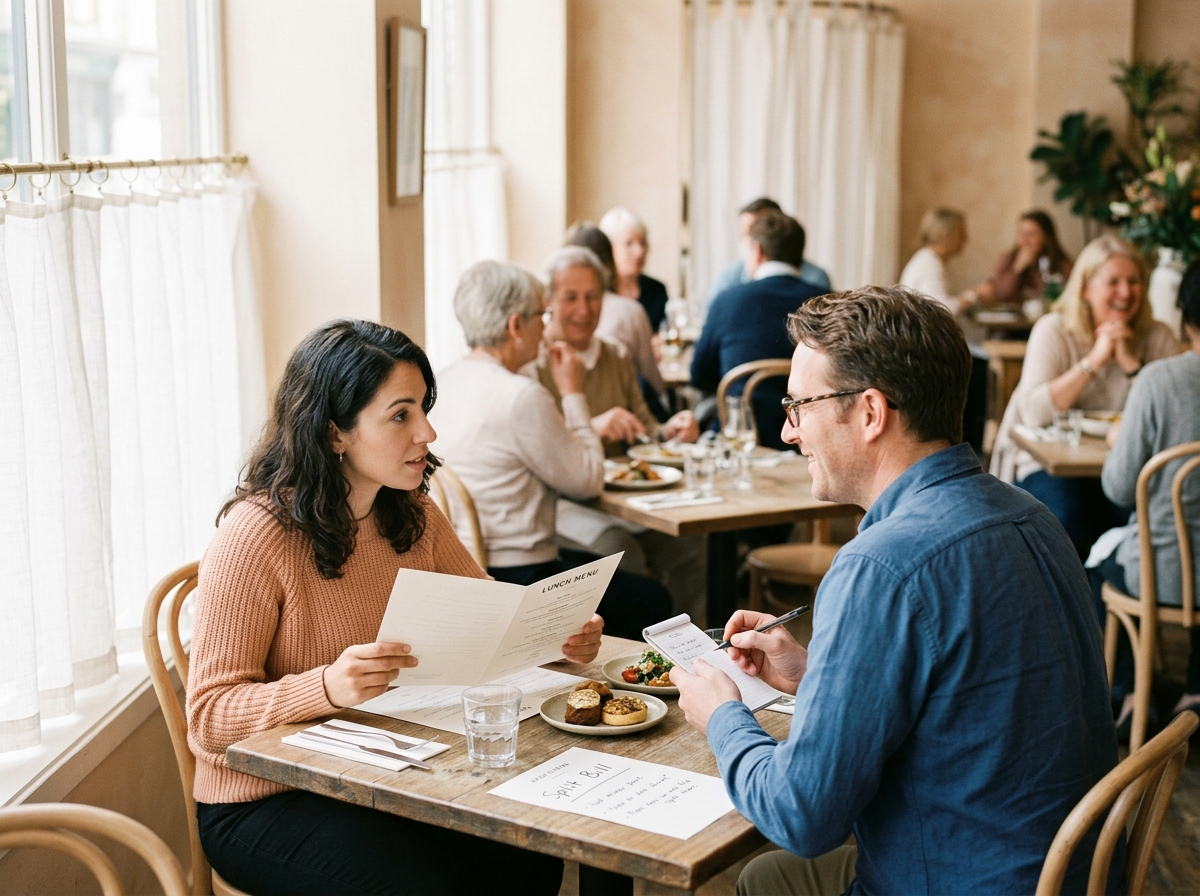
Eating out in English is mostly six fixed moments: being seated, asking about the menu, ordering drinks, ordering food, the check, and the goodbye. Each has its own template. Get those, and you can eat almost anywhere — fine dining or a casual diner — without the awkwardness that makes most learners pretend they're not hungry.
These lessons put you in the customer chair with an attentive AI waiter. You'll order the way locals do, modify dishes (no onions, dressing on the side), handle dietary questions, split the bill, and leave on good terms. A surprising amount of restaurant English is about politeness — these patterns become second nature with a few rounds of practice.
What you’ll be able to do
- ✓Walk into a restaurant abroad and order without scanning your phone.
- ✓Modify dishes confidently — allergies, swaps, "on the side".
- ✓Handle "still or sparkling water?" and other near-trick questions.
- ✓Ask for and split the bill smoothly.
- ✓Tip the right amount in the right country.
What a lesson actually feels like
You're ordering a steak, asking about a sauce, and you have a nut allergy.
Key vocabulary
Useful phrases by situation
Being seated
- “Table for two, please.”
- “Do you have a quieter table by the window?”
- “We have a reservation under Smith.”
- “How long's the wait?”
Ordering
- “I'll have the steak, medium-rare, please.”
- “What do you recommend?”
- “Could I get this without onions?”
- “Does this dish contain dairy?”
Paying
- “Could we have the bill, please?”
- “Could I pay by card?”
- “Let's split it down the middle.”
- “Keep the change — thanks.”
Common mistakes & how to fix them
Cultural notes
- ★Tipping varies wildly. US: 18–22% standard, on top of the bill. UK: 10–12.5% (often added as "service charge"). Most of continental Europe: round up or 5–10%, not always expected.
- ★In the US, "the check" or "check, please" is more common than "the bill". In the UK and most of Europe, "the bill" is standard.
- ★Don't flag down a waiter by snapping or shouting. Eye contact + a small nod or "excuse me" works in any country.
Tips from our tutors

“If you don't know what something is on the menu, ask. Waiters love describing food — it's the part of the job that doesn't feel like work.”
“Compliment the food when it arrives, even with one word. 'Wow, this looks great' is the smallest sentence that hugely improves the meal.”
Frequently asked
Will I learn the difference between American and British restaurant English?+
What if I have dietary restrictions?+
How long until I'm comfortable in a real restaurant?+
Beginner, intermediate, advanced
Tell the tutor your level at the start of the lesson and the conversation adjusts. Same topic, different depth.
Restaurant 101. Be seated, order one dish, ask for the bill. The tutor uses very predictable waiter English so you can match the script comfortably.
- →Ask for a table for two.
- →Order one dish from the menu.
- →Ask for the bill and pay.
Real dining out. Modifications, allergens, sending something back, splitting the bill. The tutor plays an attentive waiter who answers fast.
- →Modify a dish (no onions, on the side, cooked medium-rare).
- →Flag an allergy and confirm the kitchen heard.
- →Split the bill or pay only your share, politely.
Fine-dining English. Wine pairing, tasting menu, complimenting the chef, navigating an upsell. Register switches between warm and very polished.
- →Discuss a wine list and ask the sommelier for a recommendation.
- →Compliment the food specifically (not just "it was good").
- →Decline an extra course politely without losing warmth.
Suggested tutors for this topic


Related topics


Ready to practice restaurant dining?
Free 5-minute trial. No card. No commitment.
Start lesson — free →